
You have 1.7 seconds to grab attention on Instagram. That’s it. In those fleeting moments, your hook either stops the scroll or gets buried forever.
Every single day, millions of posts compete for eyeballs. Most fail. They fail because they lack one critical element: a powerful hook that makes people stop, read, and engage.
The difference between content that goes viral and content that dies in obscurity often comes down to those first few words. Your hook is your only chance to break through the noise.
This guide reveals exactly how to write Instagram hooks that go viral. You’ll discover psychology-backed formulas, proven strategies, and over 100 copy-and-paste hook ideas that actually work. Whether you’re crafting hooks manually or using tools like RapidHookGen to streamline your content creation, you’ll learn what separates viral content from everything else.
What Is an Instagram Hook?
An Instagram hook is the opening line or visual element that captures attention within the first 1.7 seconds of someone seeing your content. It’s the make-or-break moment that determines whether people keep scrolling or stop to engage.
Hooks come in three main forms. Caption hooks are the opening words of your Instagram captions. Visual hooks are the first frame of your Reels or the main image in your posts. Audio hooks are the opening sounds in video content that grab ears before eyes.
Think of your hook as a promise. It tells your audience what value they’ll get if they invest their time. Without that promise, people have zero reason to stop scrolling through endless content.
Key Insight: Research shows that Instagram users make engagement decisions in under two seconds. Your hook must communicate value instantly or lose the battle for attention.
Types of Instagram Hooks
Different content requires different hook strategies. Educational content hooks promise to teach something valuable. Entertainment hooks promise fun or surprise. Story hooks promise relatability and emotional connection.
The most effective hooks create curiosity gaps. They reveal just enough information to make people want more, but not so much that there’s nothing left to discover. This psychological tension drives engagement.
Why Instagram Hooks Matter in 2026
The Instagram algorithm rewards engagement above all else. Posts that get quick engagement within the first 30 minutes reach more people. Your hook directly determines whether you get that crucial early engagement.
Attention spans continue to shrink. People scroll faster than ever. If your hook doesn’t stop them immediately, your carefully crafted content never gets seen. The hook is your gatekeeper to all the value you’ve created.
The Algorithm Connection
Instagram’s algorithm looks at several signals in those first seconds. How long do people watch? Do they read the full caption? Does the post get saved or shared? All these metrics start with your hook.
Posts with strong hooks get better reach. The algorithm identifies engaging content and pushes it to more feeds. This creates a snowball effect where good hooks lead to viral growth.
Engagement Metrics Impact
A compelling hook increases every engagement metric that matters. Comments go up because people want to share their thoughts. Saves increase because people want to reference the content later. Shares multiply because people want to show value to their audience.
One study found that posts with question-based hooks generated 23% more comments than statements. Another showed that list-based hooks increased saves by 31%. The right hook formula dramatically impacts performance.
The Psychology Behind Viral Hooks That Go Viral
Viral hooks tap into fundamental human psychology. They trigger specific emotional and cognitive responses that make people stop scrolling and engage. Understanding these psychological principles transforms your hook writing from guesswork to science.
The Curiosity Gap Principle
The curiosity gap is the space between what people know and what they want to know. When you open a loop without closing it immediately, the human brain feels compelled to resolve that tension. This is why cliffhangers work.
Effective hooks create just enough mystery to trigger curiosity without being clickbait. They promise specific value while withholding the exact method. “I discovered the secret to…” works better than revealing the secret upfront.
Weak Hook (No Gap)
“Here’s how to grow your Instagram: post consistently, use hashtags, and engage with others.”
Problem: Everything is revealed. No reason to keep reading.
Strong Hook (Clear Gap)
“I gained 10K followers in 30 days without posting every day. Here’s the strategy everyone’s missing…”
Solution: Creates mystery about the specific strategy, compelling people to read more.
Pattern Interrupts
People scroll Instagram on autopilot. A pattern interrupt breaks that autopilot state by presenting something unexpected. It jolts the brain into paying attention because the pattern of sameness has been disrupted.
Pattern interrupts can be contrarian statements, unusual formatting, or content that goes against popular opinion. “Everything you know about Instagram growth is wrong” interrupts the pattern of typical growth advice.
Social Proof and FOMO
Humans are social creatures. We want what others have and fear missing out on valuable experiences. Hooks that leverage social proof tap into this primal instinct.
“10,000 people are already using this method” creates FOMO. “Why everyone’s talking about…” suggests a cultural moment you might miss. These hooks work because they position content as something people are already benefiting from.
Emotional Triggers
Emotions drive action more than logic. The most viral hooks trigger strong emotions: surprise, anger, joy, fear, or hope. Content that makes people feel something gets shared more than content that merely informs.
Different emotions serve different purposes. Anger drives comments and debates. Joy and surprise drive shares. Hope drives saves and return visits. Match your emotional trigger to your engagement goal.
Psychology Pro Tip: Combine multiple psychological triggers in one hook for maximum impact. A hook that creates curiosity, interrupts patterns, AND triggers emotion outperforms single-trigger hooks by significant margins.
Instagram Hook Formulas That Work
You don’t need to reinvent the wheel every time you create content. Proven hook formulas give you a framework that works across niches and content types. These formulas have generated millions of engagements across countless accounts.
The Number + Promise Formula
This formula combines specificity with value promise. Numbers attract attention and make promises feel concrete. “7 ways to…” feels more actionable than “Some ways to…”
Examples that work: “5 Instagram hooks that got me 100K followers.” “3 mistakes killing your engagement (and how to fix them).” “10 caption formulas that went viral this month.”
The key is making your number believable and your promise specific. Don’t promise “infinite followers” or list “157 ways.” Keep numbers digestible and promises achievable.
The Contrarian Formula
This formula challenges common beliefs or popular advice. It works because it creates instant curiosity and positions you as someone with insider knowledge that contradicts the mainstream.
Examples: “Stop posting every day. Here’s why…” “Hashtags are dead. Do this instead.” “You don’t need 10K followers to make money.”
The contrarian formula works best when you have proof to back up your claim. Make sure your content delivers on the promise of explaining why the conventional wisdom is wrong.
The “So vs But” Formula
This formula establishes the common approach (what people think) then introduces the better way (what actually works). It’s powerful because it validates the reader while offering improvement.
Structure: “Everyone thinks [common belief], BUT the truth is [your insight].” Examples: “Everyone posts at 9am, BUT I got 10x engagement posting at 2pm.” “Most people focus on followers, BUT engagement matters more.”
This formula works because it doesn’t make readers feel stupid for believing the common approach. It positions your advice as an upgrade, not a criticism.
The Question + Stakes Formula
Ask a question that highlights what’s at risk. This formula works because it forces self-reflection while establishing why the answer matters. The stakes make people care about finding the solution.
Examples: “Are your hooks costing you followers?” “What if one change could double your engagement?” “Do you know the one word killing your captions?”
The question must be relevant to your audience’s pain points. The stakes must feel real and significant. Generic questions without clear consequences fall flat.
The Bold Statement Formula
Make a confident, attention-grabbing claim that seems almost too good to be true. This formula works through shock value and the implicit promise of proof.
Examples: “I cracked the Instagram algorithm.” “This hook formula gets engagement every single time.” “I grew faster by posting less.”
Bold statements must be backed by evidence. If you make a big claim, your content needs to deliver big proof. Otherwise, you damage credibility.
Want to Test Multiple Hook Formulas Instantly?
Writing dozens of hook variations to find winners takes hours. RapidHookGen generates 10-20 formula-based hooks in under 30 seconds, letting you test different approaches without the time investment.
The Story Hook Formula
Start with a personal anecdote or relatable scenario. Stories create emotional connection and make abstract advice feel real and applicable. People remember stories far better than statistics.
Examples: “I was about to quit Instagram when…” “Three months ago, I had 200 followers. Today I have 20K. Here’s what changed…” “My post flopped. Then I changed one word…”
Effective story hooks establish relatability quickly. Get to the transformation or lesson within the first two sentences. Don’t make readers wait for the payoff.
The Contrast Formula
Show two opposite scenarios to highlight transformation or difference. This formula works because humans are wired to notice contrasts and want to move from the negative state to the positive one.
Examples: “Before: 100 followers, no engagement. After: 10K followers, 500+ likes per post.” “Most accounts: posting blindly. Successful accounts: using this strategy.”
The contrast must be significant enough to matter. Small differences don’t create enough tension to drive engagement. Make your “before vs after” dramatic and desirable.
The Anti-Advice Formula
Tell people what NOT to do. This formula works because it’s unexpected (most content tells you what TO do) and because people are often more motivated to avoid pain than gain pleasure.
Examples: “Never use these hooks if you want engagement.” “Stop doing these 3 things on Instagram.” “Here’s what I quit doing to grow faster.”
The anti-advice formula works best when you explain the alternative. Tell people what to quit AND what to do instead. Just listing mistakes without solutions frustrates readers.
Beginner Guide: How to Write Your First Viral Hook
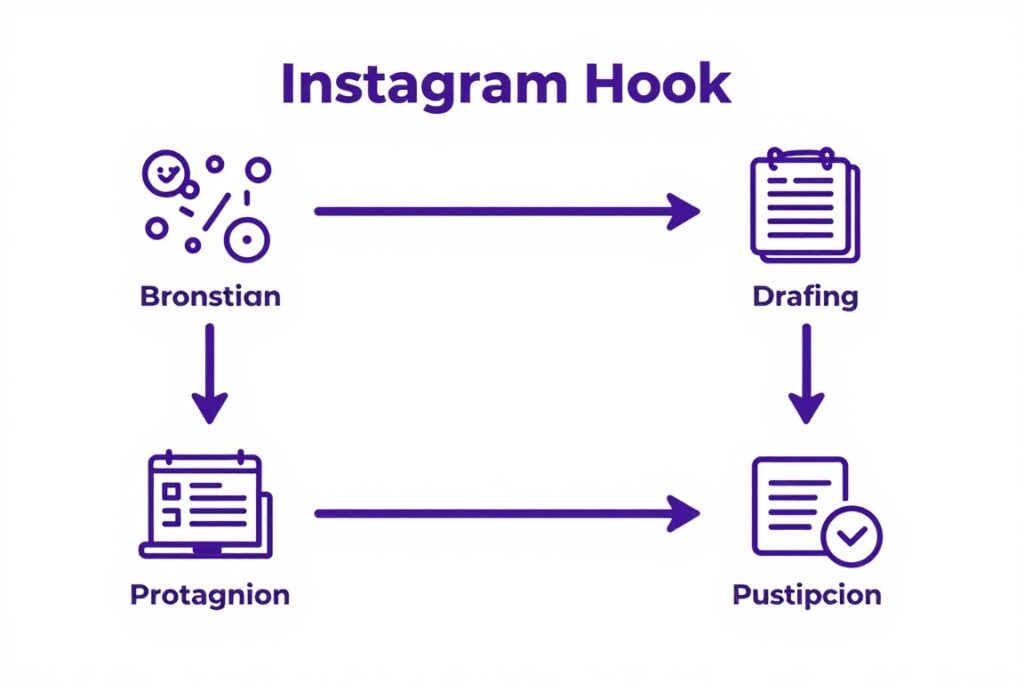
Starting with hook writing can feel overwhelming. You stare at a blank caption box wondering what words will grab attention. This step-by-step process removes the guesswork and gives you a reliable method for creating your first effective hooks.
Step 1: Identify Your Audience’s Main Problem
Every great hook addresses a specific pain point or desire. Before writing a single word, ask yourself what problem your audience wants solved. The more specific, the better.
Bad problem identification: “People want Instagram growth.” Too vague. Better: “People want more followers but don’t have time to post daily.” This specificity makes your hook more relevant.
Step 2: Choose Your Hook Formula
Pick one formula from the previous section that fits your content type. New creators should start with the Number + Promise formula because it’s straightforward and reliably effective.
Match your formula to your goal. Educational content works well with lists and contrarian statements. Story content needs narrative hooks. Product content benefits from transformation contrast.
Step 3: Write Five Variations
Never settle for your first draft. Write five different hooks for the same piece of content. This forces your brain past obvious choices and into creative territory where viral hooks live.
Your five variations should test different approaches. Try a question, a bold statement, a story start, a contrarian view, and a numbered list. See which feels strongest for your specific content.
Step 4: Test the “So What?” Question
Read each hook variation and ask “So what? Why should I care?” If you can’t immediately answer with a compelling reason, your hook isn’t strong enough. This brutal test separates weak hooks from strong ones.
Every hook must answer the reader’s implicit question: “What’s in it for me?” If your hook doesn’t communicate clear value in the first three seconds, rewrite it.
Step 5: Choose Your Strongest Hook
Compare your five variations. Look for the one that creates the most curiosity, promises the clearest value, and feels most authentic to your voice. When in doubt, choose the hook that surprised you when you wrote it.
Get a second opinion if possible. Share your top two hooks with someone in your target audience and ask which stops them. Fresh eyes catch things you miss.
- Starting with “Hi everyone” or generic greetings
- Being too vague about the value you offer
- Making promises you can’t keep in the content
- Using clickbait that feels manipulative
- Writing hooks that are too long (over 15 words)
- Forgetting to create curiosity
Beginner Mistakes to Avoid
- Start with immediate value or curiosity
- Make specific promises they can deliver
- Use simple, clear language
- Test multiple hook variations
- Study hooks that stopped their own scrolling
- Keep practicing without overthinking
What Successful Beginners Do
Practice Exercise
Take a post you’ve already created. Rewrite the hook five different ways using five different formulas. Compare the engagement your original hook got to what these new versions might achieve. This exercise builds your hook-writing muscle.
Do this exercise with every post for two weeks. By post 10-15, you’ll notice hook writing becoming faster and more intuitive. The formulas will become second nature and your creativity will flow more freely.
Advanced Hook Writing Strategies
Once you’ve mastered basic hook formulas, these advanced strategies take your skills to the next level. These techniques separate content that performs well from content that goes viral and generates massive engagement.
Hook Sequencing
Your first line grabs attention. Your second line keeps it. Hook sequencing means planning both the opening grab AND the follow-up that prevents people from scrolling away after reading one sentence.
Strong sequence example: “I spent $10,000 on Instagram ads. [GRAB] Here’s what I learned about organic growth instead. [KEEP]” The first line creates shock. The second promises unexpected value.
Weak sequences promise value but don’t deliver escalation. “I tried Instagram ads. They worked.” There’s no reason to keep reading. Always escalate with your second sentence.
The Open Loop Technique
Open a conversational loop in your hook that can only be closed by reading the full caption or watching the full video. This technique creates psychological tension that drives watch time and read-through rates.
Example: “The third strategy changed everything. But first, you need to understand…” You’ve created anticipation for “the third strategy” while forcing engagement with the foundational content first.
Be careful not to abuse this technique. If you open loops but never close them satisfyingly, your audience will feel manipulated and stop trusting your content. Always deliver on the promise.
A/B Testing Your Hooks
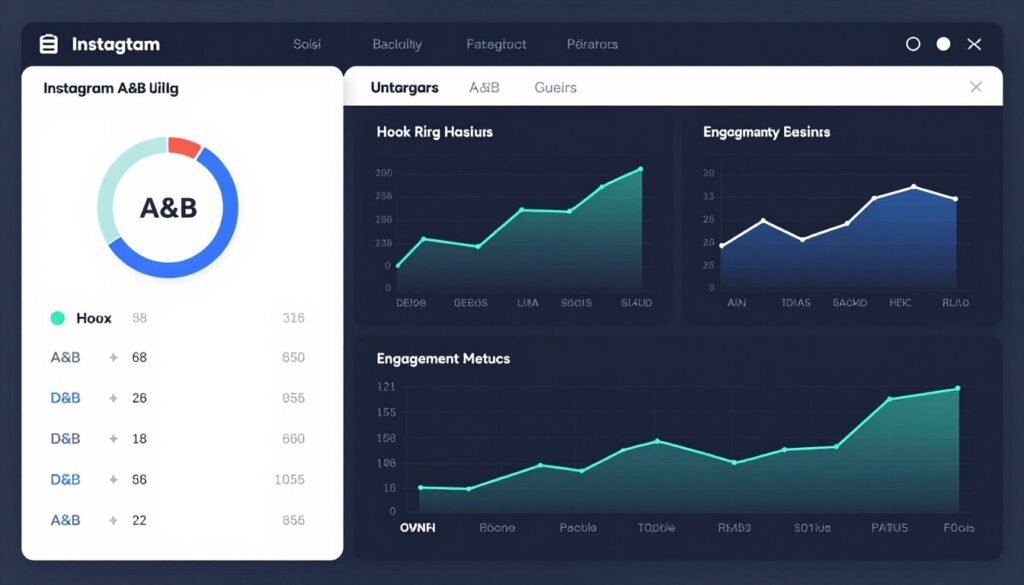
Professional content creators test multiple hooks for the same content to identify what resonates. Post the same video with different hooks on different days, or test hooks in Stories before committing to feed posts.
Track engagement rate, not just likes. A hook that gets 100 likes from 1,000 views (10% engagement) beats a hook that gets 500 likes from 10,000 views (5% engagement). Percentage matters more than raw numbers.
Test variables systematically. Change only one element between versions. If you test “5 secrets” vs “I discovered,” you’re testing both number specificity AND personal voice. Test one variable at a time for clear insights.
Time-Saving Tip: Creating multiple hook variations for A/B testing manually can consume hours. RapidHookGen generates 10-20 variations in under 30 seconds, letting you test extensively without the time investment.
Trend Integration
Viral hooks often ride cultural moments or trending topics. When you connect your hook to what people are already talking about, you tap into existing attention and conversation energy.
Current trend example: “Everyone’s using AI for content now. But most people are doing it wrong. Here’s the one thing…” This hook connects to the AI content trend while positioning your take as unique.
The key is authentic integration. Don’t force trend connection if it’s not relevant. Audiences smell manufactured relevance and reject it. Only reference trends you genuinely have insight about.
Voice and Personality
Advanced creators develop a distinctive hook voice that becomes recognizable. Your audience should eventually recognize your content from the hook style alone, even before seeing your username.
Consider how you want to sound. Aspirational and inspiring? Casual and friendly? Direct and no-nonsense? Humorous and relatable? Your hook voice should match your overall brand personality consistently.
Experiment with distinctive elements. Maybe you always start with “Let’s be honest…” or “Here’s the truth about…” These signature phrases become part of your brand identity over time.
Multi-Platform Hook Adaptation
A hook that works on Instagram might flop on TikTok or LinkedIn. Advanced creators adapt hooks to platform culture while maintaining core message. Instagram favors aspirational, TikTok loves raw and real, LinkedIn rewards professional insights.
Same content, different hooks: Instagram: “The 5 strategies that grew my business to six figures.” TikTok: “Nobody talks about this business growth hack.” LinkedIn: “After analyzing 500 successful businesses, I found these five common strategies.”
Study top content on each platform to understand cultural norms. What works where reveals audience expectations and algorithmic preferences. Adapt your hooks accordingly without losing authenticity.
Common Instagram Hook Mistakes (And How to Avoid Them)
Even experienced creators make hook mistakes that kill engagement. Recognizing these errors in your own content is the fastest way to improve performance. Here are the most common problems and exactly how to fix them.
Being Too Vague
Vague hooks don’t give people a reason to stop scrolling. “Check out this tip” tells readers nothing. What tip? Why should they care? Vague hooks create zero curiosity because there’s no concrete promise.
Fix: Add specificity. Instead of “Here’s a growth tip,” write “This one DM strategy brought me 500 new followers.” Specific numbers, methods, and outcomes make hooks concrete and compelling.
Clickbait Without Substance
Promising “the secret that changes everything” but delivering basic obvious advice destroys trust. People feel tricked. They won’t engage with your future content because they remember being disappointed.
Fix: Make promises you can actually deliver. If your hook promises mind-blowing advice, your content better blow minds. Under-promise and over-deliver builds trust that leads to loyal audience growth.
Ignoring Your Target Audience
Writing hooks that appeal to everyone appeals to no one. “Everyone needs to see this” isn’t targeted enough. Your ideal audience needs to feel like you’re speaking directly to their specific situation and problem.
Fix: Name your audience or their problem in the hook. “Struggling content creators, this changed my life” or “If your posts get zero engagement, read this.” Specific targeting makes relevant people stop immediately.
Overcomplicating the Message
Hooks that take mental effort to understand get scrolled past. Remember, you have 1.7 seconds. If people need to read your hook twice to understand it, you’ve already lost them to simpler content.
Fix: Use simple words and short sentences. “This growth method is predicated on algorithmic optimization” loses to “This simple trick beats the algorithm.” Clear always beats clever.
What Works
- Specific promises with numbers
- Clear, simple language
- Audience-targeted messaging
- Curiosity without manipulation
- Delivering on every promise
- Authentic voice and personality
What Fails
- Vague generic statements
- Clickbait that disappoints
- Complex jargon-filled hooks
- Trying to appeal to everyone
- Being boring or predictable
- Copying others without authenticity
Wrong Hook Length
Hooks that are too long get cut off on mobile devices. Hooks that are too short don’t provide enough information to create curiosity. Finding the sweet spot makes the difference between stops and scrolls.
Fix: Aim for 8-12 words for caption hooks. Test on mobile to ensure nothing important gets cut by the “…more” button. Front-load your most important words. Make every word earn its place.
No Emotional Hook
Purely informational hooks miss the emotion that drives engagement. “Here are five Instagram tips” might be accurate but it doesn’t make anyone feel anything. Emotion creates connection and drives action.
Fix: Add emotional language. “Feeling frustrated with low engagement? These 5 tips finally worked for me” includes both emotion (frustration) and hope (finally worked). Emotion makes people care about the information.
Forgetting the Call to Action
Your hook grabs attention, but without direction, people don’t know what to do next. “Read this” or “Watch until the end” gives clear guidance. People engage more when you tell them exactly what action to take.
Fix: Add a simple directive. “Read the caption for the full strategy” or “Watch this before you post again” guides engagement. Be direct about what you want people to do.
100+ Viral Instagram Hook Examples by Category
Learn from hooks that have generated millions of engagements. These examples span every content type and audience. Study them, adapt them, and make them your own. Remember: copy the structure, not the exact words.
Educational Content Hooks
These hooks promise learning and valuable information. They work best when your content delivers genuine teaching that improves your audience’s skills or knowledge.
- “The 5 Instagram mistakes I see every single day”
- “Nobody tells you this about viral content”
- “Here’s what 100K followers taught me about engagement”
- “I analyzed 1,000 viral posts. Here’s what they have in common”
- “Stop doing this if you want real engagement”
- “The truth about Instagram growth that nobody talks about”
- “I spent 6 months testing hooks. These 7 formulas won”
- “Your content isn’t the problem. Your hooks are”
- “3 psychology tricks that make people stop scrolling”
- “This changed everything about how I write captions”
- “What I wish I knew about Instagram hooks before wasting 2 years”
- “The one hook formula that works for every niche”
- “How to grab attention in 1.7 seconds (backed by data)”
- “I tested 50 hooks. Here are the only 5 you need”
- “The Instagram hook formula nobody’s talking about”
Story-Based Hooks
Story hooks create immediate emotional connection through relatable experiences. They work because people see themselves in your narrative and want to know how it ends.
- “I was about to quit Instagram when this happened”
- “Three months ago I had 200 followers. Today I have 20K”
- “My post got 5 likes. Then I changed one word in the hook”
- “I spent $10,000 learning what I’m about to teach you for free”
- “The moment I realized my hooks were killing my content”
- “I copied this viral hook formula. Here’s what happened”
- “My biggest Instagram mistake cost me 6 months of growth”
- “I almost deleted my account. Then I discovered this”
- “The day everything changed for my Instagram growth”
- “I got 100K views by accident. Here’s what I learned”
- “My content was great. My hooks were terrible. Here’s the fix”
- “From 0 to 50K followers. These hooks made the difference”
Contrarian and Opinion Hooks
These hooks challenge conventional wisdom and position you as someone with insider knowledge. They create engagement through controversy and debate.
- “Stop posting daily. Here’s why consistency is overrated”
- “Hashtags don’t work anymore. Do this instead”
- “Everyone’s wrong about Instagram engagement”
- “The worst advice I see about hooks every day”
- “You don’t need 10K followers to make money. You need this”
- “Forget everything you know about viral content”
- “I went against all the Instagram rules. It worked”
- “The one thing ‘Instagram experts’ won’t tell you”
- “Why most hook advice is completely useless”
- “I stopped following Instagram best practices. My engagement tripled”
- “Everyone’s chasing followers. Here’s what actually matters”
- “The viral content secret hiding in plain sight”
Question-Based Hooks
Questions force mental engagement. They make people stop and consider their answer, creating immediate investment in your content. The best questions highlight problems or desires.
- “Want to know why your hooks aren’t working?”
- “Are your captions costing you followers?”
- “What if one word could double your engagement?”
- “Ready to stop wasting time on bad hooks?”
- “Know the difference between hooks and clickbait?”
- “Ever wonder why some posts go viral and others flop?”
- “Is your hook strategy stuck in 2020?”
- “What’s stopping your content from going viral?”
- “Can you spot the difference between these two hooks?”
- “Which hook would make YOU stop scrolling?”
- “Why do some accounts grow 10x faster with worse content?”
Urgency and FOMO Hooks
These hooks create fear of missing out or time pressure. They work because humans are loss-averse and don’t want to miss valuable opportunities or information.
- “Before you post again, read this”
- “This Instagram strategy won’t work forever”
- “Save this before Instagram removes it”
- “The hook trend everyone’s about to copy”
- “While your competitors sleep on this strategy…”
- “This window for viral growth is closing fast”
- “Before the algorithm changes again, do this”
- “Most people will scroll past this. Don’t be most people”
- “The one thing you should do before posting today”
- “This trend is exploding right now. Here’s how to use it”
Behind-the-Scenes and Vulnerable Hooks
Authenticity builds trust. These hooks work by showing vulnerability, honesty, and real experiences. They create connection through relatability and human truth.
- “The failure nobody wants to talk about (but everyone experiences)”
- “I’ll be honest: I struggled with hooks for two years”
- “Let’s talk about what really happens behind the scenes”
- “Here’s what I got wrong about Instagram for way too long”
- “The messy truth about viral content”
- “I failed 100 times before this hook worked”
- “Can we talk about how hard this actually is?”
- “The reality check nobody’s giving you about Instagram”
- “I’m tired of seeing fake advice, so here’s the real deal”
- “Behind every viral post is this unsexy truth”
List and Number-Based Hooks
Lists promise organized, scannable value. The specificity of numbers makes the promise feel concrete and achievable. These hooks consistently perform well across all niches.
- “7 hooks that got me 100K followers”
- “5 words that instantly grab attention”
- “3 hook mistakes keeping you stuck at 1K followers”
- “10 viral hook formulas I use every single day”
- “The 4 types of hooks that work in every niche”
- “8 hooks that make people stop scrolling immediately”
- “6 caption formulas that went viral this month”
- “These 3 hooks generated 1 million views”
- “5 hooks I’ll never stop using (because they work)”
- “The 7 psychology tricks behind every viral hook”
Transformation and Contrast Hooks
Before-and-after dynamics create powerful desire. These hooks work by showing the gap between where people are and where they want to be.
- “From 100 followers to 10K: The hook that changed everything”
- “Before: zero engagement. After: 500+ likes per post”
- “I went from ignored to viral. Here’s the exact hook strategy”
- “Bad hooks vs viral hooks: Spot the difference”
- “Same content, different hook: 100 views vs 10K views”
- “How one hook took me from struggling to thriving”
- “The before and after that changed my entire strategy”
- “From posting into the void to getting real engagement”
Pro Implementation Tip: Don’t just copy these hooks word-for-word. Study the structure and psychology, then adapt them to your specific niche, voice, and audience. The formula matters more than the exact words.
Manual Hook Writing vs AI Hook Generation
The debate between manual hook writing and AI-generated hooks has intensified as tools become more sophisticated. Both approaches have merit. Understanding the strengths and limitations of each helps you choose the right method for your needs.
Time Investment Comparison
Manual hook writing requires significant time. You brainstorm, draft, revise, test, and refine. Creating five hook variations for one post can take 30-60 minutes for experienced writers, longer for beginners.
AI hook generation produces variations in seconds. Tools designed specifically for social media content can generate 10-20 different hooks in under a minute. This speed advantage lets you test more options without time constraints.
The question isn’t which is faster (AI clearly wins) but whether speed sacrifices quality. The answer depends on the tool and your editing skills.

Quality and Authenticity
Manual writing has one undeniable advantage: authentic voice. When you write your own hooks, they sound like you. Your personality, humor, and unique perspective shine through naturally.
AI-generated hooks can sometimes feel generic or formulaic. Early AI tools produced robotic-sounding content that lacked personality. However, newer specialized tools trained on viral content perform significantly better.
The best approach combines both. Use AI to generate options quickly, then edit them to match your voice. This hybrid method gives you speed without sacrificing authenticity.
Consistency at Scale
Writing hooks manually becomes exhausting when you post daily or manage multiple accounts. Quality suffers when you’re creatively drained. Every content creator hits walls where the hooks just won’t come.
AI maintains consistent quality regardless of your creative energy. Whether it’s your first hook of the day or your fiftieth, the output quality remains stable. This consistency helps maintain posting schedules without burnout.
Learning and Skill Development
Writing hooks manually builds skills. You learn what works through trial and error. Each hook you write teaches you something about language, psychology, and your audience. This education has long-term value.
AI tools can actually accelerate learning. By generating multiple options, they show you different approaches and structures you might not have considered. Study AI-generated hooks to understand patterns and formulas faster.
When Manual Writing Works Best
- You’re building foundational skills
- Content requires unique personal voice
- You have time for careful crafting
- Story-based content with specific details
- You enjoy the creative writing process
When AI Generation Works Best
- You need multiple options quickly
- You’re testing different approaches
- Managing multiple accounts or clients
- Facing creative block or deadline pressure
- Want to maintain consistent posting schedule
Cost Considerations
Manual writing costs time, which is valuable. If you spend an hour writing hooks instead of doing revenue-generating activities, that hour has an opportunity cost. Calculate whether your time is better spent elsewhere.
AI tools typically cost $10-50 per month. Compare this to the value of your time. If you save 10 hours monthly and your time is worth more than $5 per hour, AI tools pay for themselves immediately.
The Hybrid Approach
The most successful creators use both methods strategically. They use AI to generate options quickly, then apply manual editing to add personality and refinement. This combination offers speed, variety, and authenticity.
Your workflow might look like: AI generates 10 hooks → you select the best 3 → you manually refine them to match your voice → you test all three to see what performs best. This process is faster than pure manual writing while maintaining quality.
ChatGPT vs RapidHookGen: Which Tool Creates Better Instagram Hooks?
Both ChatGPT and specialized tools like RapidHookGen can generate Instagram hooks, but they approach the task very differently. Understanding these differences helps you choose the right tool for your needs and get better results.
Specialization vs Generalization
ChatGPT is a general-purpose AI trained on broad internet content. It can write hooks, but hook creation is one tiny function among thousands. It lacks specialized training on what makes Instagram content specifically go viral in 2026.
RapidHookGen is built specifically for social media content creation. It’s trained on viral hooks, captions, and engagement patterns from actual high-performing Instagram accounts. This specialization creates better, more relevant output.
Prompt Engineering Required
ChatGPT requires detailed prompts to generate good hooks. You need to specify your niche, audience, tone, hook formula, and desired outcome. Getting quality output takes prompt engineering skills and multiple attempts.
Specialized hook generators streamline this process. You input basic information (topic, audience, goal) and the tool applies Instagram-specific best practices automatically. No prompt engineering expertise needed.
Output Variety and Relevance
ChatGPT often produces hooks that sound good but don’t align with current Instagram best practices. It might generate 2020-era hooks or formats that no longer perform well with today’s algorithm and audience behaviors.
Tools designed for Instagram stay updated with platform trends. RapidHookGen generates hooks that reflect current viral patterns, trending formats, and what’s actually working right now on Instagram.
Speed and Efficiency
With ChatGPT, you write a prompt, review output, refine the prompt, generate again, and repeat until you get usable hooks. This iteration takes time, especially if you’re not experienced with prompt writing.
Dedicated tools generate relevant options immediately. One click produces 10-20 Instagram-optimized hooks ready to test. This speed difference compounds when you’re creating content regularly.
| Feature | ChatGPT | RapidHookGen |
| Instagram Specialization | General-purpose AI | Built specifically for Instagram |
| Setup Time | Requires detailed prompts | Simple input fields |
| Learning Curve | Prompt engineering skills needed | Immediate usability |
| Output Speed | Multiple iterations often needed | Instant relevant results |
| Platform Trends | Generic social media knowledge | Current Instagram-specific patterns |
| Additional Features | Requires separate prompts for each | Hooks, captions, hashtags, CTAs in one tool |
| Best For | Occasional use, general writing | Regular content creators, time efficiency |
Integration of Complete Content Elements
ChatGPT generates hooks separately from captions, hashtags, and other elements. You need multiple prompts and sessions to create a complete Instagram post. This fragmented process takes time and produces inconsistent results.
RapidHookGen generates hooks, captions, hashtags, CTAs, and campaign ideas together. The elements are designed to work cohesively, saving time and ensuring consistent quality across your entire post.
When to Use Each Tool
ChatGPT works well for occasional content creation, brainstorming, or when you need general writing assistance across many tasks. If you’re comfortable with prompt engineering and only create content occasionally, it’s a versatile option.
Specialized tools like RapidHookGen excel for regular content creators who value time efficiency and Instagram-specific optimization. If you post daily, manage multiple accounts, or want hooks that reflect current best practices, specialization wins.
Many successful creators use both: ChatGPT for general content strategy and brainstorming, specialized tools for actual content creation. This combination leverages each tool’s strengths.
Why Dedicated Hook Generators Save Time and Improve Results
Generic AI tools can write hooks, but dedicated hook generators transform the entire content creation workflow. Here’s why specialization matters and how tools built specifically for social media hooks deliver better results faster.
Platform-Specific Optimization
Instagram hooks need specific characteristics to perform well. They must work within character limits, match platform culture, and align with what Instagram’s algorithm currently favors. Generic tools don’t account for these nuances.
Dedicated generators build platform rules directly into their output. They understand Instagram’s unique requirements: optimal hook length, mobile display constraints, caption structures, and current engagement patterns. This built-in knowledge produces better results without requiring your expertise.
Workflow Efficiency
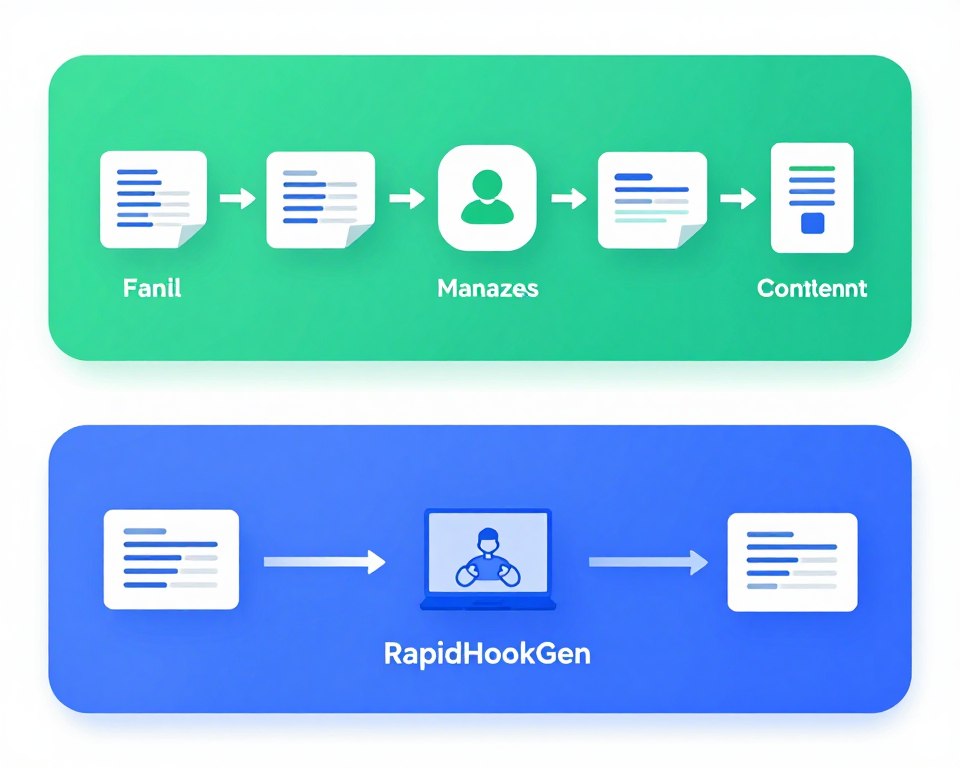
Creating complete Instagram content manually means writing hooks, drafting captions, researching hashtags, creating CTAs, and planning campaigns separately. Each step takes time. The fragmented workflow kills momentum and extends content creation from minutes to hours.
RapidHookGen generates everything you need in one session. Input your topic once and receive hooks, complete captions, relevant hashtags, engaging CTAs, campaign ideas, and even AI video hooks. This integrated approach reduces content creation time from hours to minutes.
Consistency Across Content
When you create content elements separately, inconsistency creeps in. Your hook promises one thing, your caption delivers another, your CTA asks for something unrelated. This disconnect confuses audiences and reduces engagement.
Specialized tools ensure cohesion. When all elements are generated together with awareness of each other, they naturally align. Your hook promise matches your caption delivery matches your CTA ask. This consistency improves performance.
Reduced Decision Fatigue
Content creators make dozens of decisions per post: which hook formula, what tone, which words, how long, what examples. This constant decision-making is exhausting, especially when creating multiple posts daily.
Dedicated generators reduce decisions to the essentials. You choose your topic and goal. The tool handles the tactical decisions about structure, length, tone, and format based on proven patterns. Less decision fatigue means more creative energy for strategy.
Testing Multiple Variations
Testing is essential for finding what resonates with your specific audience. But manually creating 10-15 hook variations for A/B testing takes significant time. Most creators skip testing because it’s too time-consuming.
AI hook generators make testing practical. Generate 20 variations in 30 seconds, pick your top 5, and test them without spending hours on creation. This testing capability leads to better results because you’re working with data, not guesses.
Experience the Time-Saving Difference
See how RapidHookGen generates viral hooks, complete captions, optimized hashtags, compelling CTAs, campaign ideas, and AI video hooks in under 30 seconds. No prompt engineering required. No fragmented workflow. Just complete, cohesive content ready to post.
Learning from Patterns
Dedicated tools expose you to more hook patterns faster. By reviewing dozens of generated options, you see different structures, formulas, and approaches. This exposure educates you about what works, improving your own writing over time.
Think of specialized generators as both tool and teacher. They do the work while showing you the patterns behind effective hooks. This dual benefit accelerates your skill development.
Scalability for Growth
As your content operation grows, manual methods don’t scale. Managing multiple accounts, posting multiple times daily, or running client campaigns becomes impossible without tools designed for volume.
Specialized generators scale effortlessly. Whether you need 5 hooks or 500, the process remains fast and consistent. This scalability supports business growth without requiring proportional time increases.
Expert Tips for Writing Viral Instagram Hooks
These advanced tips come from analyzing thousands of viral posts and understanding exactly what separates good hooks from legendary ones. Implement these strategies to elevate your hook game beyond the basics.
Study What Stops Your Own Scroll
The best research is your own behavior. When you scroll Instagram, notice which posts make YOU stop. Screenshot them. Analyze what grabbed your attention. Those patterns reveal what works for your audience demographic.
Keep a swipe file of hooks that stopped you. Categorize them by formula, emotion, or technique. This personal database becomes your reference library. When you need inspiration, review hooks that work on people like you.
Match Hook to Content Type
Tutorial content needs different hooks than entertainment content. Educational posts need promise-based hooks. Entertainment needs surprise or humor. Inspirational content needs emotion. Mismatched hooks confuse audiences.
Before writing your hook, clarify your content type. Ask: “What am I offering here – education, entertainment, inspiration, or community?” Then choose a hook formula that aligns with that content purpose.
Use Power Words Strategically
Certain words consistently outperform others in hooks. Words like “secret,” “proven,” “simple,” “truth,” and “nobody” trigger curiosity. Words like “stop,” “never,” and “before” create urgency. Strategic word choice amplifies impact.
Build your own power word list. Track which words in your best-performing hooks drove engagement. Double down on words that work for your specific audience. Different niches respond to different language.
Create Pattern Disruption
If everyone in your niche uses the same hook formulas, differentiate by doing something unexpected. When everyone asks questions, make bold statements. When everyone shares lists, tell stories. Pattern disruption creates novelty that stops scrolls.
Monitor your competitors’ hooks. Identify patterns everyone follows. Then consciously choose different approaches. This strategic differentiation makes your content feel fresh in a sea of sameness.
Test Hooks Separately from Content
Sometimes a post fails not because the content is bad, but because the hook didn’t grab attention. Test this by republishing the same content with a different hook. If performance improves dramatically, you’ve confirmed the hook was the variable.
Keep your best content in rotation. If a post had great substance but poor reach, the hook probably failed. Repost with a stronger hook and watch engagement transform. Good content deserves good hooks.
Front-Load Your Most Powerful Words
Instagram captions get cut off after 125 characters on mobile. Your most compelling words must appear before the “…more” button. Starting with weak phrases like “I wanted to share…” wastes precious space.
Put the hook—your strongest, most attention-grabbing words—in the first 10 words. Everything after builds on that foundation, but the first line must do the heavy lifting of stopping the scroll.
Leverage Specificity
Generic hooks get generic results. “How to grow on Instagram” is vague. “How I grew from 500 to 50K followers in 90 days without paid ads” is specific. Specificity creates credibility and clear expectations.
Add numbers, timeframes, and specific outcomes to hooks. Instead of “This changed my life,” write “This one strategy brought me 3 new clients in 2 weeks.” Specificity transforms abstract promises into concrete possibilities.
Expert Secret: The best hooks often combine 2-3 psychological triggers. Curiosity + specificity + emotion creates stronger pull than any single element alone. Layer triggers for maximum impact.
Understand Your Audience’s Awareness Level
Hooks for unaware audiences need to create problem awareness: “Why you’re losing followers without realizing it.” Hooks for solution-aware audiences can be more direct: “The follower retention strategy you’ve been looking for.”
Match hook sophistication to audience knowledge. Don’t assume expertise your audience doesn’t have. Meet people where they are with language and concepts they already understand.
Use Social Proof in Hooks
Mentioning numbers creates instant credibility. “The strategy 10,000 creators are using” works better than “A great growth strategy.” Social proof reduces skepticism and increases trust.
Be specific with social proof. “This worked for me and 5 clients” beats “This works for everyone.” Specific numbers feel more authentic and credible than vague claims.
Best Practices for Consistent Hook Performance
Viral hooks aren’t about luck. They’re the result of consistent practices and strategic thinking. These best practices keep your hooks performing well over time, not just occasionally.
Develop a Hook Writing Routine
Don’t write hooks when you’re creating content. Write them in dedicated sessions when your creative energy is highest. Batch-create hooks for multiple posts, then match them to content later. This separation improves both quality and efficiency.
Many successful creators write 20-30 hooks in one session, then have a library to choose from. This removes the pressure of creating the perfect hook on demand and lets you evaluate options with fresh perspective.
Keep a Hook Swipe File
Every time you see a hook that makes you stop, save it. Build a collection organized by formula, emotion, or niche. This swipe file becomes your inspiration source when you’re stuck or need ideas fast.
Don’t just save hooks—analyze them. Note why each one works. What formula does it use? What emotion does it trigger? What makes it stand out? This analysis trains your eye to recognize effective patterns.
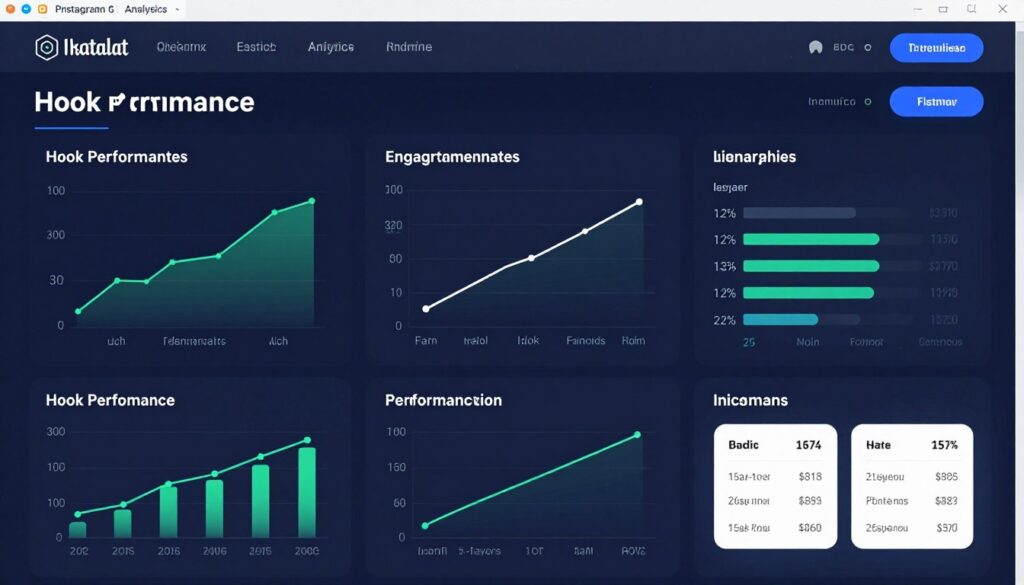
Track Hook Performance
Use Instagram Insights to monitor how different hooks perform. Track metrics like reach, engagement rate, saves, and shares. Over time, patterns emerge showing which hook types work best for your specific audience.
Create a simple spreadsheet: post date, hook type, engagement rate, reach. After 30-50 posts, analyze your data. You’ll discover that certain formulas consistently outperform others for your audience. Double down on winners.
Refresh Successful Hooks
When a hook works exceptionally well, don’t retire it—refresh it. Change a few words, update numbers, or adjust the angle. The core formula that worked continues working with minor variations.
Example: If “5 mistakes killing your engagement” performed well, try “5 engagement killers nobody talks about” or “The 5 engagement mistakes I see every single day.” Same structure, fresh presentation.
Stay Updated on Platform Changes
Instagram evolves constantly. Hook styles that worked in 2023 might underperform in 2026. Follow Instagram’s official creator account and leading social media strategists to stay current on platform trends and algorithm updates.
When Instagram introduces new features (like new Reels formats or caption features), adapt your hooks accordingly. Early adopters of platform changes often see temporary engagement boosts.
Balance Testing with Consistency
Test new hook formulas regularly, but not so often that you lack data on what works. A good balance is 70% proven formulas that work for you, 30% experimental approaches. This keeps content fresh while maintaining performance.
When you test new hooks, test them properly. Give each approach at least 5-7 tries before judging effectiveness. One failed hook doesn’t mean the formula doesn’t work—execution or timing might have been off.
- Review top-performing content in your niche
- Save hooks that stop your scroll
- Write hooks when creative energy is high
- Test hooks before full posts when possible
Daily Practices
- Analyze engagement data from recent posts
- Update your hook swipe file with winners
- Batch-create hooks for upcoming content
- Review and refresh successful old hooks
Weekly Practices
- Conduct deep analysis of hook performance
- Identify pattern trends in what works
- Update hook templates based on data
- Research competitor hook strategies
Monthly Practices
Build a Personal Hook Formula Library
As you create content, certain formulas will consistently work for your unique audience. Document these as your personal hook library. Create templates you can quickly adapt for different topics.
Your library might include: “The [number] [topic] mistakes I see every day,” “Here’s what [timeframe] taught me about [topic],” “Stop [common action]. Do this instead.” These become your reliable go-to structures.
Consider Time and Context
Some hooks work better at certain times or in certain contexts. End-of-year hooks about lessons learned perform well in December. “Spring cleaning” angles work in March. Align hooks with calendar context when relevant.
Similarly, consider current events and trending topics. Hooks that reference what people are already thinking about gain extra resonance. Stay culturally aware and adapt hooks to the moment when appropriate.
2026 Instagram Hook Trends
Instagram evolves rapidly. Hook strategies that dominated previous years give way to new trends as audience preferences shift and the algorithm updates. Understanding current trends helps you create hooks that resonate now, not hooks that worked last year.
Authenticity Over Polish
The trend toward raw, authentic content continues accelerating. Hooks that feel too polished or corporate are increasingly skipped. Audiences want real people sharing real experiences, not perfectly crafted marketing messages.
Effective 2026 hooks embrace conversational language: “Okay so nobody’s talking about this but…” or “Real talk about Instagram growth…” These hooks feel like friend-to-friend conversation, not brand-to-consumer messaging.
Micro-Niche Specificity
Generic hooks targeting “everyone interested in Instagram growth” underperform compared to hyper-targeted hooks for specific audiences. “Instagram tips for burnt-out course creators” outperforms “Instagram growth tips.”
The more specific your audience targeting in the hook, the stronger the connection with that exact audience. They feel seen, understood, and confident the content applies to their situation. Specificity creates resonance.
Question-Based Engagement Hooks
Hooks that ask genuine questions and invite responses see higher engagement because they explicitly request interaction. “What’s your biggest hook writing struggle?” or “Am I the only one who…” create immediate conversation starters.
The key is asking questions you genuinely want answers to, not rhetorical questions. Audiences sense authenticity. Questions that spark real dialogue outperform questions used as literary devices.
Value-First, Sell-Never Hooks
Hooks that feel like sales pitches get scrolled past immediately. 2026 audiences have refined BS detectors. They want value first, always. Hooks must lead with genuine help, not thinly veiled product promotion.
Even when your content includes product mentions, your hook should focus purely on value. “The one Instagram strategy that actually works” performs better than “Why you need this Instagram tool.” Lead with benefit, not product.
Short-Form Video Optimization
As Reels continue dominating Instagram, hooks must work in both text and video contexts. Visual and audio hooks become as important as text hooks. The first second of video must grab attention before any words are read.
Effective video hooks combine visual surprise, text overlay, and audio hooks. “Wait for it…” text overlays, unexpected visual openings, and pattern-interrupting audio all work together to stop thumbs mid-scroll.
AI Integration (Done Right)
More creators use AI for content creation, but audiences can spot generic AI output. The trend isn’t using AI or not using AI—it’s using AI well. Hooks generated by AI need human editing to add personality and authenticity.
The successful approach: use AI for speed and options, then edit for voice and uniqueness. Tools like RapidHookGen provide the foundation, you add the humanity. This hybrid approach wins in 2026.
Community-Driven Hooks
Hooks that acknowledge community, ask for input, or reference shared experiences build stronger connections. “Drop a 🔥 if you’ve experienced this” or “Tell me I’m not alone in…” create belonging and encourage engagement.
These hooks work because they transform content from one-way broadcast to two-way conversation. Audiences engage more with content that positions them as participants, not passive consumers.
2026 Trend Insight: The most successful hooks in 2026 combine multiple trends—authentic voice + micro-niche targeting + genuine questions. Multi-trend hooks outperform single-trend approaches significantly.
Contrarian Takes That Challenge Norms
As content volume increases, standing out requires stronger differentiation. Hooks that challenge conventional wisdom or popular advice create instant curiosity. “Actually, posting daily is hurting your growth” interrupts autopilot scrolling.
The key is backing contrarian hooks with solid reasoning. Don’t be contrarian just for attention—be contrarian because you have genuine insight that contradicts popular but flawed advice.
Frequently Asked Questions About Instagram Hooks
How long should an Instagram hook be?
The ideal Instagram hook is 8-15 words or roughly 60-100 characters. This length is short enough to be read quickly (remember, you have 1.7 seconds) but long enough to create curiosity and promise value.
Keep in mind that Instagram captions get cut off after approximately 125 characters on mobile devices. Your most powerful words must appear before the “…more” button. Test your hooks on mobile to ensure nothing critical gets hidden.
Can AI really write good Instagram hooks?
Yes, but quality varies significantly by tool. Generic AI tools like basic ChatGPT can write hooks, but they often lack Instagram-specific optimization. Specialized tools trained on viral social media content perform much better because they understand platform-specific patterns and current trends.
The best results come from using AI as a starting point, then editing for your unique voice and audience. AI handles speed and variety, you add personality and authenticity. This hybrid approach combines efficiency with quality.
How do I make hooks engaging without being clickbait?
The difference between engaging hooks and clickbait is simple: delivery. Engaging hooks promise specific value and deliver on that promise. Clickbait promises something your content doesn’t deliver.
To stay on the right side of this line, ask yourself: “Does my content fully satisfy what my hook promised?” If yes, it’s an engaging hook. If no, it’s clickbait. Always ensure your hook accurately reflects your content value while still creating genuine curiosity.
What’s the difference between a hook and a caption?
The hook is the opening line—the first 1-2 sentences designed to stop scrolling and capture attention. The caption is the full text beneath your Instagram post. Think of the hook as the headline and the caption as the full article.
Your hook’s job is to make people stop and read. Your caption’s job is to deliver value, educate, entertain, or inspire. A great hook without a quality caption disappoints. A great caption without a strong hook never gets read. You need both.
How often should I test new hook formulas?
Follow the 70/30 rule: use proven hook formulas that work for your audience 70% of the time, and test new approaches 30% of the time. This balance maintains performance while allowing innovation.
When testing new formulas, give each approach at least 5-7 posts before making judgments. One failed hook doesn’t mean the formula doesn’t work—timing, content quality, or execution might have been factors. Track results over multiple attempts to identify genuine patterns.
Should I use the same hook formula repeatedly?
Yes, but with variation. When you find a hook formula that performs consistently well for your audience, use it regularly—but don’t use identical hooks. Vary the specific words, numbers, and angles while maintaining the proven structure.
For example, if “The [number] mistakes…” works well, vary it: “The 5 engagement mistakes I see daily,” “7 growth mistakes costing you followers,” “3 caption mistakes killing your reach.” Same formula, fresh presentation.
Do hooks work the same across all niches?
Hook formulas are universal, but execution varies by niche. A question-based hook works for both fitness and finance, but the specific language, tone, and angle differ significantly. Business audiences respond to professional language; fitness audiences prefer motivational language.
The key is adapting universal formulas to your niche’s culture and your audience’s expectations. Study top performers in your specific niche to understand what hooks resonate with your exact audience demographic.
What if my hooks get engagement but not conversions?
This indicates a disconnect between your hook and your desired outcome. Your hook might be creating curiosity but attracting the wrong audience, or your content isn’t including clear calls-to-action (CTAs).
Solution: Ensure your hook targets your ideal audience specifically, not just anyone interested in the topic. Also, include clear CTAs in your captions directing engaged readers toward your desired action—whether that’s visiting a link, commenting, saving, or sharing.
Start Writing Instagram Hooks That Actually Go Viral
You now have everything you need to write Instagram hooks that stop scrolls and drive engagement. You understand the psychology behind viral hooks, you have proven formulas, you’ve seen 100+ examples, and you know the common mistakes to avoid.
The difference between content that goes viral and content that disappears isn’t luck. It’s not timing. It’s not the algorithm playing favorites. The difference is those first few words—your hook.
Every piece of valuable content you create deserves a hook powerful enough to make people actually see it. Without that hook, your best insights, hardest work, and most valuable ideas never reach the audience that needs them.
Start implementing these strategies immediately. Take your next Instagram post and write five different hooks using five different formulas. Test them. Track which one performs best. Learn from the data. Refine your approach.
Remember that hook writing is a skill. You’ll improve with practice. Your first attempts might not go viral, but each hook you write teaches you something about your audience, your voice, and what resonates. The learning compounds over time.
Whether you write hooks manually or use tools like RapidHookGen to generate options quickly, the principles remain the same: create curiosity, promise value, match your audience’s awareness level, and always deliver on your promises.
The Instagram landscape is more competitive than ever. Standing out requires strategy, not hope. Your hooks are your competitive advantage. Invest time in mastering them, and you’ll see the difference in your engagement, reach, and growth.
Stop letting weak hooks kill your best content. Start creating hooks that command attention, stop scrolls, and drive the engagement your content deserves. Your audience is out there, scrolling right now. Your hook is the only thing standing between them and your value.
Ready to Stop Spending Hours Writing Content?
Visit RapidHookGen and generate viral hooks, captions, hashtags, CTAs, campaigns, and AI video hooks in under 30 seconds. No more staring at blank screens. No more creative blocks. Just powerful, proven hooks ready to drive engagement.
Your next viral post starts with a powerful hook. Make it count.