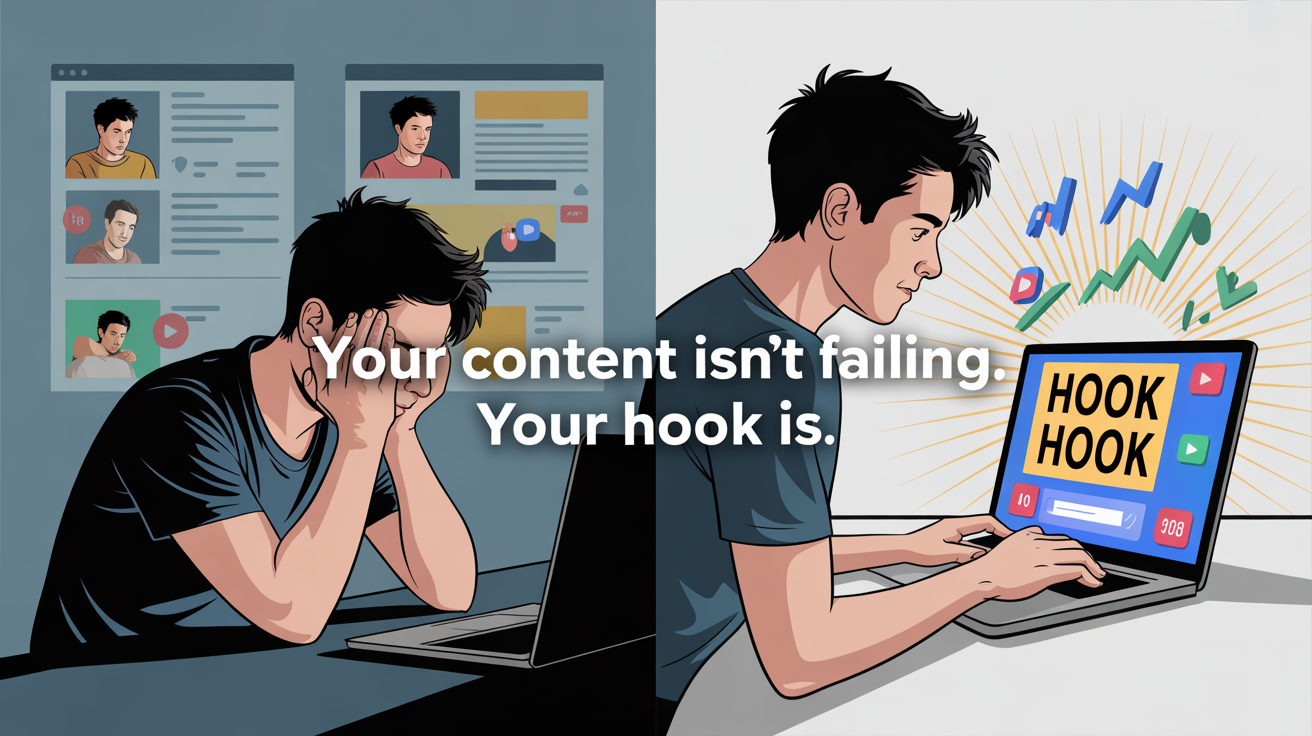
You spent four hours editing that video. Tweaked the colors. Perfected the audio. Hit publish with high hopes. And then… 37 views. Not even a comment.
We’ve all been there. The painful reality is that most content dies in the first three seconds — before anyone even gets to the value you worked so hard to create.
The culprit? Weak hooks that fail to stop the scroll.
The Brutal 3-Second Rule of Content Hooks
Here’s the harsh truth about today’s content landscape: your audience makes the decision to stay or scroll in about three seconds. Not minutes. Not even ten seconds. Three.
This isn’t because people are mean or have the attention span of goldfish. It’s because we’re drowning in content. The average person scrolls through 300 feet of content every day. That’s taller than the Statue of Liberty.
Your content isn’t competing with other creators in your niche. It’s competing with everything — breaking news, messages from friends, cute dog videos, and that random recipe that somehow made it into their feed.
The platforms themselves are designed to encourage this behavior. TikTok’s algorithm rewards watch time, so it needs to know quickly if a video is worth promoting. Instagram prioritizes content that keeps people engaged. LinkedIn’s feed shows the first two lines before requiring a click to “see more.”
The result? A ruthless filtering mechanism where weak hooks get instantly dismissed, and the brilliant content that might follow never gets a chance to shine.
Bad Hooks vs. Good Hooks: Real Examples
Let’s look at some real-world examples that show the stark difference between hooks that fail and hooks that grab attention:
Bad Hooks (Instant Death)
“Hey guys! Welcome back to my channel! Today I’m going to be talking about content creation tips…”
“In this video, I wanted to share some thoughts about how to grow your audience…”
“Social media is really important for businesses in 2025…”
“I’ve been thinking a lot about content strategy lately…”
These hooks fail because they’re generic, slow to get to the point, and don’t create any tension or curiosity. They sound like everyone else and give the viewer no reason to keep watching.
Good Hooks (Scroll Stoppers)
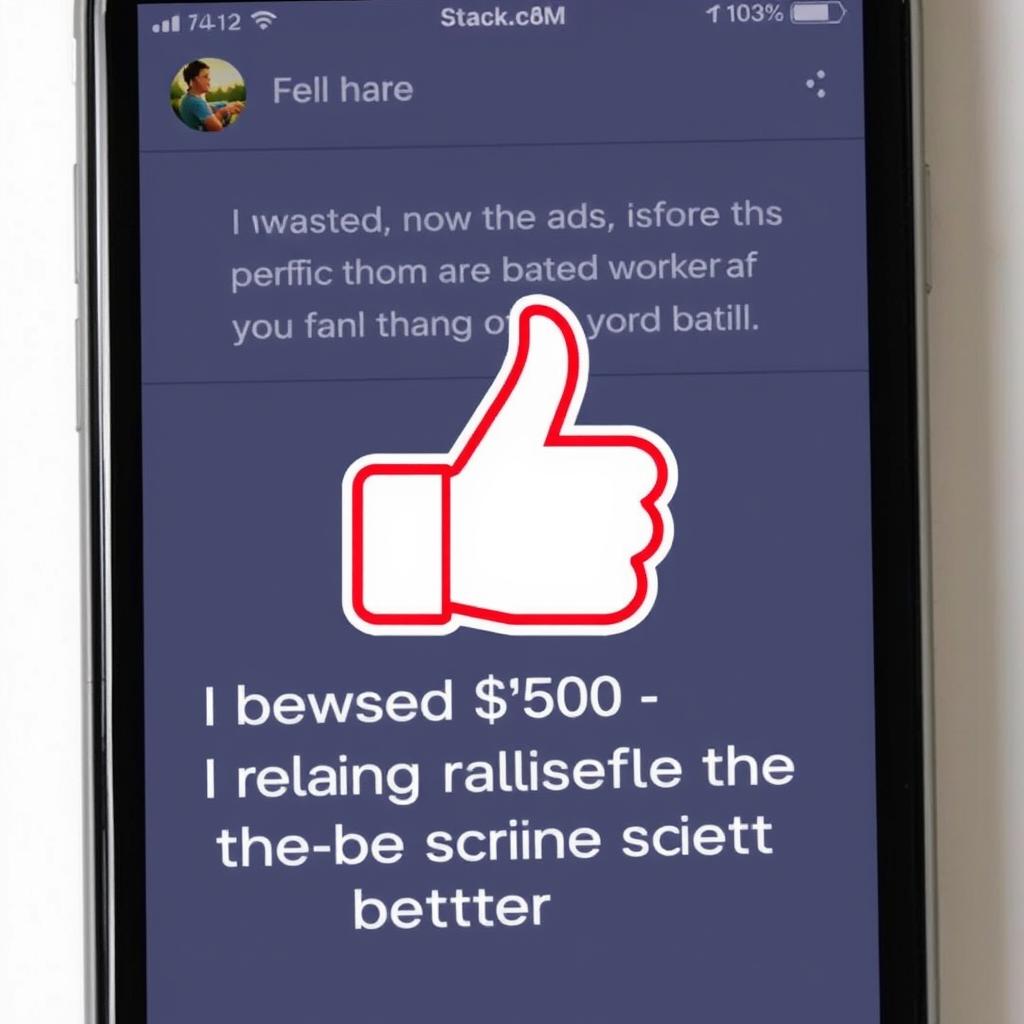
“I wasted $500 on ads before I realized this one free script worked better.”
“Most creators make this one fatal mistake in their first 10 seconds — and it’s costing them thousands of followers.”
“I analyzed 50 viral TikToks and found a pattern that nobody’s talking about.”
“The strategy that got me 100K followers works exactly opposite to what most gurus teach.”
These hooks work because they create immediate tension, promise specific value, use numbers for credibility, and make you wonder “what is it?” You can’t help but keep watching.
4 Simple Hook Frameworks Anyone Can Use
You don’t need to be a copywriting genius to create hooks that work. Here are four proven frameworks you can start using immediately:
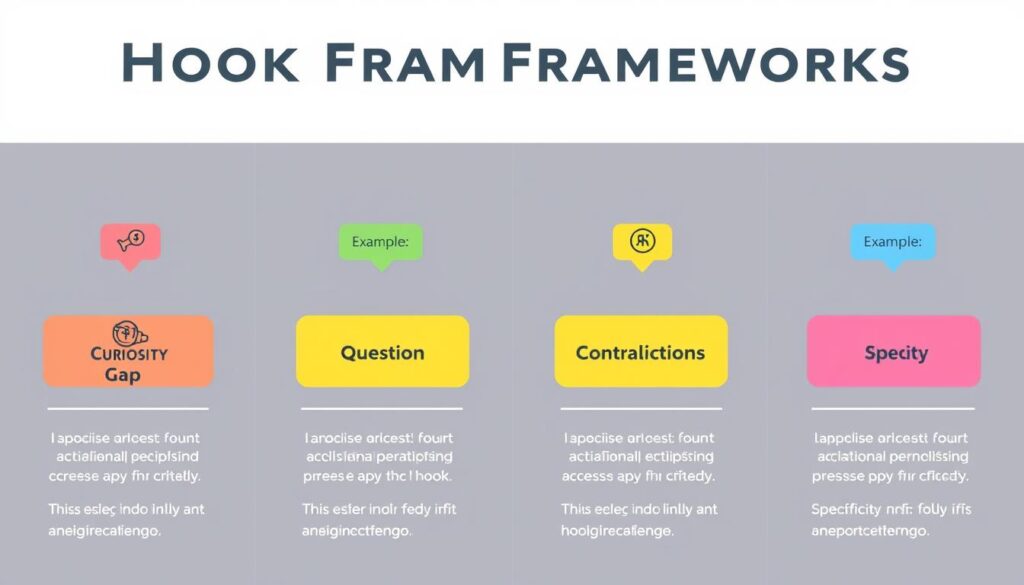
1. The Curiosity Gap
This framework creates an information gap that can only be satisfied by continuing to consume your content.
Formula: Hint at valuable information + withhold the complete answer
Example: “I found a content strategy that tripled my views. It’s not what you think.”
The curiosity gap works because our brains are wired to seek closure. When we sense there’s information we don’t have but want, we experience mild psychological discomfort that can only be relieved by getting the answer.
2. The Direct Question
Questions automatically engage the brain because we’re hardwired to answer them, even if just mentally.
Formula: Ask a specific, relevant question that targets a pain point
Example: “Is your content getting views but zero engagement? Here’s why.”
Direct questions work best when they highlight a problem your audience is experiencing but haven’t fully articulated. When they think “yes, that’s exactly my problem!” they’ll stick around for the solution.
3. The Contradiction
Challenge a commonly held belief to immediately stand out from the noise.
Formula: State the opposite of what most people believe or teach
Example: “Posting every day is killing your growth. Here’s what actually works.”
Contradictions work because they create cognitive dissonance. When someone reads something that challenges what they believe, they want to know more — either to confirm their existing belief or to learn something new.
4. The Specificity Hook
Use precise numbers, results, or details to instantly build credibility.
Formula: Include specific numbers, timeframes, or results
Example: “How I grew from 243 to 10,578 followers in 60 days without posting reels.”
Specificity works because it signals authenticity and expertise. Vague claims feel like marketing; specific details feel like real experience. Our brains trust precision.
Practical Tips to Implement Today

1. Start with the Hook, Not the Content
Most creators make the mistake of creating their content first, then trying to figure out how to introduce it. Flip this process. Write 5-10 potential hooks before you even start creating the main content.
This forces you to clarify your value proposition and ensures your content delivers on the promise of your hook. It’s also much easier to shape content around a strong hook than to retrofit a hook onto finished content.
2. The First Line Test
For every piece of content you create, look at just the first line in isolation. Ask yourself: “If this was all someone saw, would they want more?”
If the answer is “maybe” or “no,” rewrite it. Your first line has one job: to get people to read the second line. Nothing else matters if this fails.
3. A/B Test Your Hooks
Create two versions of the same content with different hooks and see which performs better. Many creators think their content is failing when it’s just the hook that needs work.
You can do this by posting the same core content with different hooks a few weeks apart, or by testing hooks on different platforms simultaneously.
4. Study Hooks in the Wild
Start a “hook collection” on your phone. Screenshot hooks that made you stop scrolling, even in topics you don’t care about. What made you pause? Was it curiosity? A bold claim? A relatable problem?
The hooks that work on you will likely work on your audience too. Analyze patterns in the ones that grabbed your attention and adapt them to your content.
Platform-Specific Hook Strategies
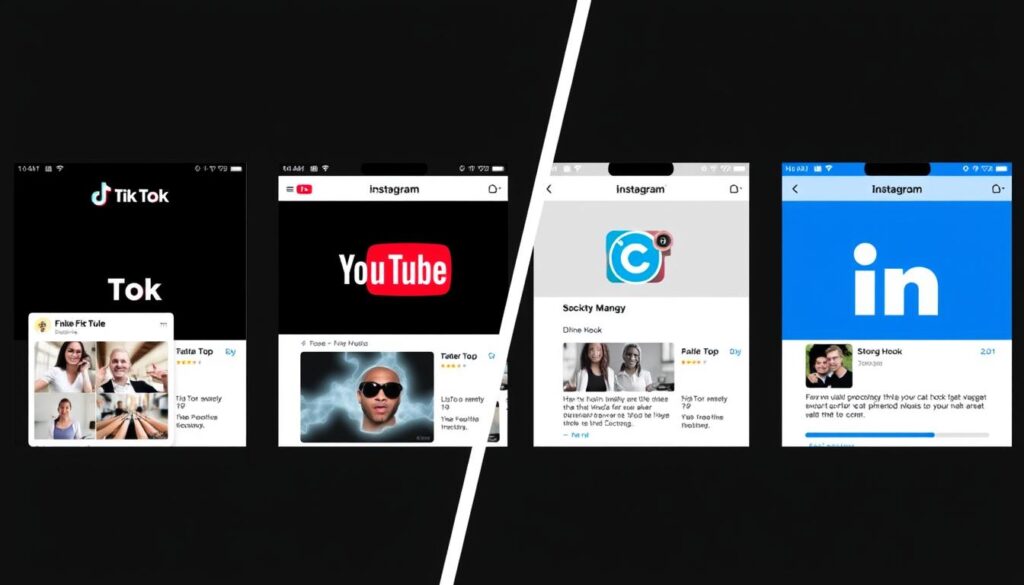
TikTok Hooks
TikTok’s algorithm rewards watch time above all else. Your hook needs to work in 1-2 seconds.
Start with movement or a visual pattern interrupt
Use on-screen text that creates curiosity
Begin with “POV:” or “When you…” to create immediate context
Make a bold claim that challenges conventional wisdom
YouTube Hooks
YouTube values both click-through rate and watch time. Your hook needs to deliver on your thumbnail’s promise.
Address the viewer directly: “You’re probably doing X wrong…”
Tease the end result: “By the end of this video, you’ll know how to…”
Create a mini-story arc in the first 15 seconds
Use the “what, why, how” structure to organize your hook
Instagram/LinkedIn Text
For text posts, remember that only the first 1-2 lines show before “see more.” Make them count.
Start with a one-sentence paragraph that creates tension
Use line breaks strategically to control pacing
Begin with “I used to think…” to signal a valuable lesson
Lead with a surprising statistic or counterintuitive fact
The Psychology Behind Great Content Hooks
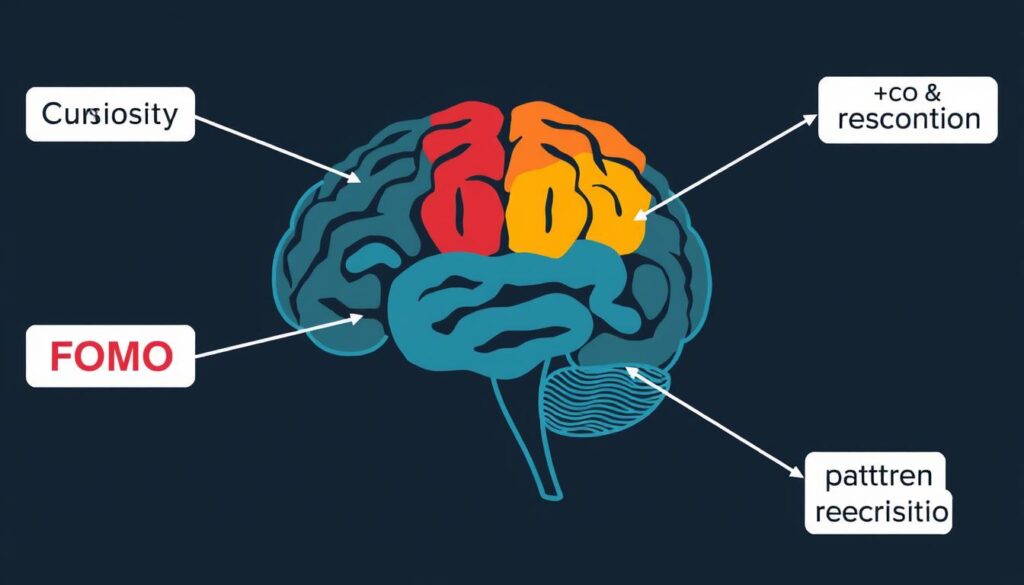
Understanding why hooks work on a psychological level can help you create more effective ones. Here are the key psychological principles at play:
The Zeigarnik Effect
Our brains remember unfinished tasks better than completed ones. When you create a hook that opens a loop (presents a problem without immediately solving it), the brain becomes uncomfortable and seeks closure.
This is why cliffhangers and “you won’t believe what happened next” hooks are so effective — they create psychological tension that can only be resolved by continuing to watch or read.
Pattern Interruption
Our brains are constantly looking for patterns and filtering out the familiar. When something breaks the expected pattern, we pay attention.
This is why hooks that challenge conventional wisdom or present unexpected information (“I grew my audience by posting less, not more”) grab attention — they interrupt our brain’s autopilot mode.
Loss Aversion
We feel the pain of loss more acutely than the pleasure of gain. Hooks that highlight what someone might be missing or losing tap into this powerful motivator.
This is why “you’re making this mistake” or “why your content isn’t performing” hooks work so well — they trigger our fear of missing out or doing something wrong.
Common Hook Mistakes to Avoid
The Bait-and-Switch
Promising something in your hook that your content doesn’t deliver is the fastest way to lose trust. If your hook says “The exact strategy that got me 10K followers in 30 days,” your content better deliver exactly that — not general tips.
Viewers who feel misled not only leave, but they’re less likely to engage with your future content. Algorithms notice this pattern and show your content to fewer people over time.
The Slow Burn
Starting with pleasantries, long intros, or context before getting to the hook. Remember, you have 3 seconds, not 30. Get to the point immediately.
Save your “hey guys” and channel updates for after you’ve hooked the viewer. Lead with your strongest point, then provide context once you’ve earned their attention.
The Generic Promise
Hooks like “tips to grow your audience” or “how to make better content” are too vague to create curiosity. They don’t signal specific value or create tension.
Add specificity, numbers, or unexpected elements: “3 counterintuitive audience growth tactics that worked after everything else failed” is much stronger.
The Alienating Hook
Being too niche too quickly can limit your reach. Hooks that immediately narrow your audience (“For Shopify store owners using Klaviyo…”) signal to everyone else that the content isn’t for them.
Start with the broader problem or desire, then narrow down to your specific audience once you’ve captured attention.
Practice Makes Perfect: Tools to Help

Writing hooks is a skill that improves with practice. I’ve found that setting aside time specifically for hook writing — separate from content creation — helps tremendously.
One approach I’ve used is to write at least 10 different hooks for each piece of content before choosing the strongest one. This forces you to look at your content from different angles and avoid settling for the first idea that comes to mind.
To speed up this process, I’ve been using RapidHookGen to help generate hook variations. It’s been useful for brainstorming different approaches when I feel stuck in a particular hook pattern. The tool suggests frameworks based on what’s working in your niche, which helps break out of creative ruts.
Whatever method you choose, the key is consistent practice. Save hooks that performed well and analyze why they worked. Look for patterns in your most successful content and gradually develop your own hook style that resonates with your specific audience.
Your Content Deserves to Be Seen

You put hours into creating valuable content. You research, script, film, edit, and polish. But none of that matters if no one makes it past the first three seconds.
The good news? Hooks are a learnable skill. They follow patterns and principles that anyone can master with practice. And unlike many aspects of content creation that require expensive equipment or technical expertise, writing better hooks costs nothing but time and attention.
Start by implementing one framework from this article in your next piece of content. Pay attention to how it performs compared to your usual approach. Then try another. Small improvements in your hook writing can lead to exponential growth in your content’s performance.
Remember: Your brilliant ideas deserve an audience. Don’t let them die in the first three seconds because of a weak hook.
If you want to practice writing better hooks faster, you can try RapidHookGen for free here: https://rapidhookgen.com/creators